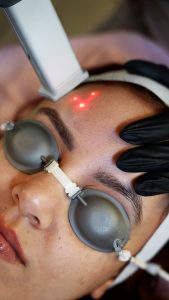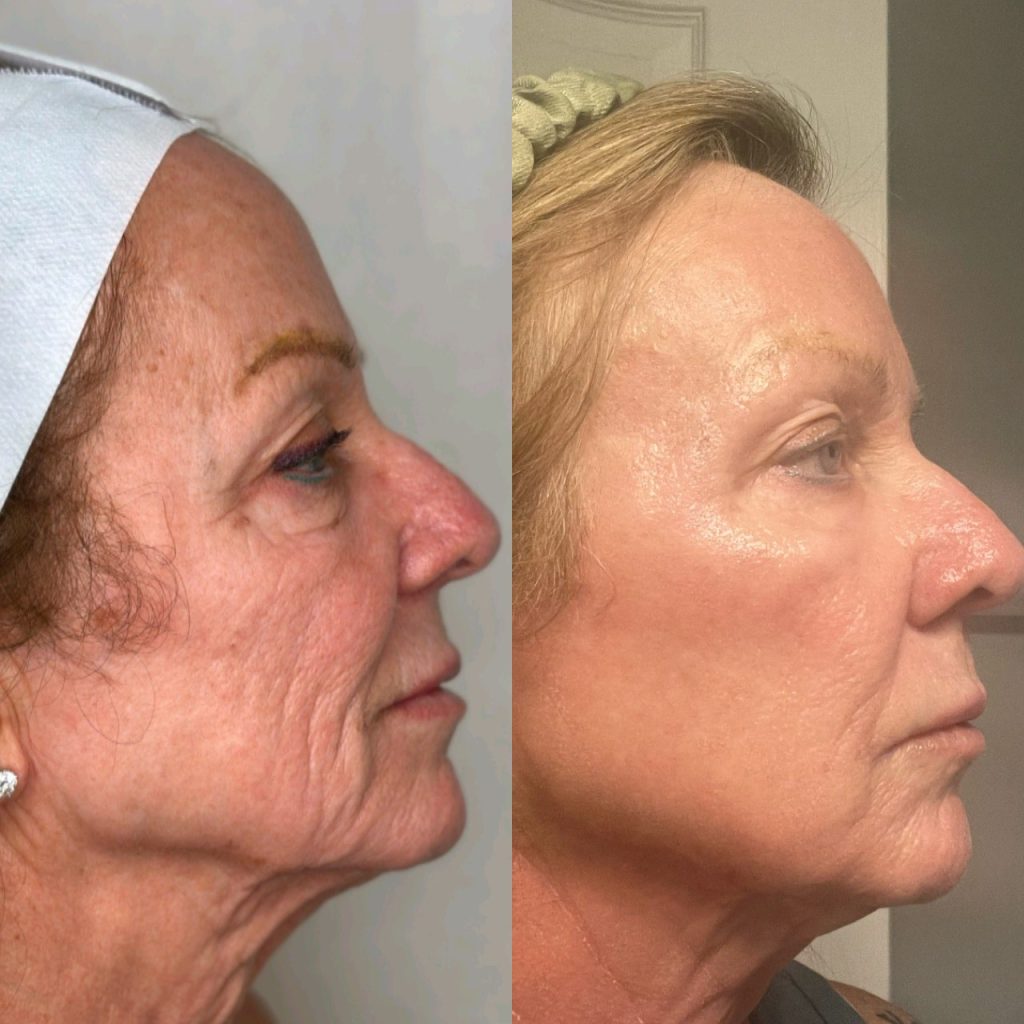
It’s official: Vogue has declared that “filler fatigue” is on the rise, as fountain-of-youth seekers shift from the dreaded pillow face look toward a more subtle “tweakment” plan courtesy of noninvasive laser treatments and skin rejuvenating procedures.
Enter HELIX skin resurfacing, a noninvasive laser modality that combines the benefits of advanced fractional CO2 technology with non-ablative skin resurfacing to help tighten, smooth and remove discoloration. While there is no true replacement for dermal fillers, an ultra- effective procedure like HELIX offers a noninvasive solution that delivers natural-looking, nuanced results.
Unlike similar technologies of years past, HELIX tackles multiple concerns at once while offering the benefit of minimal downtime, making it suitable for all skin types and tones.
How HELIX works
Long considered the go-to for treating photodamage, acne scarring, wrinkles and other signs of aging, CO2 lasers are known to be among the most effective out there. However, they’re also intense, often causing significant swelling and redness and requiring extended downtime.
HELIX works differently by using multiple laser wavelengths: a 1570nm laser, which works deep within the skin’s layers to lift pigment and tighten without damaging surrounding skin; and a CO2 laser, which removes (or ablates) the skin’s top layer while also stimulating new collagen production to help improve scarring, texture irregularities, sagging, fine lines and wrinkles.
HELIX’s unique technology combines the benefits of a CO2 laser with non-ablative resurfacing tohelp reduce recovery time. This allows your provider to incorporate superficial resurfacing with a deeper treatment to help you achieve your desired results.
Types of HELIX treatments</br>
HELIX treatment options include fractional ablative, fractional non-ablative and combination skin resurfacing options. The most aggressive option, fractional ablative resurfacing, removes
damaged skin from the surface. Non-ablative fractional resurfacing delivers a precise wavelength of light below the skin’s surface to prompt new collagen production without damage to the skin’s outer layer.
Simply put: The intensity of your treatment can be completely customized for you, depending on what you want to treat and the amount of downtime that works with your lifestyle.
The gentle HELIX Sultra treatment utilizes fractional non-ablative thermal collagen stimulation to help improve skin tone, texture and fine lines without injuring the skin’s surface. Because the light wavelength does not impact melanin in the skin, Sultra is considered a safer option for darker skin tones.
The HELIX CoolPeel fractional ablative treatment removes damaged tissue on the skin’s top layer without causing heat damage to the surrounding skin. It improves the appearance of sun damage, skin laxity, acne scars, enlarged pores, and skin texture and tone with little to no downtime.
Lastly, the high-impact hybrid HELIX Fusion treatment delivers impressive results in just a single session. It combines ablative and non-ablative resurfacing to treat sun damage, laxity, pigmentation, texture issues, fine lines and wrinkles, providing enhanced outcomes and faster healing. Customizable settings allow for safe options for both light and dark skin tones.
What to expect
HELIX can be used to treat skin concerns on the face, neck, chest, hands, arms and legs. Treatments are quick, with most sessions lasting 15 minutes to an hour. Depending on the treatment performed, downtime is minimal, and results can be seen in one to three treatments.
Your provider will customize the intensity of your treatment depending on your skin type, goals and desired downtime. They may apply a topical numbing cream to lessen any discomfort during the procedure; however, most clients describe the pain level as minimal.
Redness and swelling will be most prominent during the first 48 hours; redness, dryness and flaking may last up to seven days and your skin may have a sandpaper-like feel. You will be advised to stay out of the sun and be diligent about sunscreen application. Your provider will discuss any additional aftercare recommendations during your appointment.